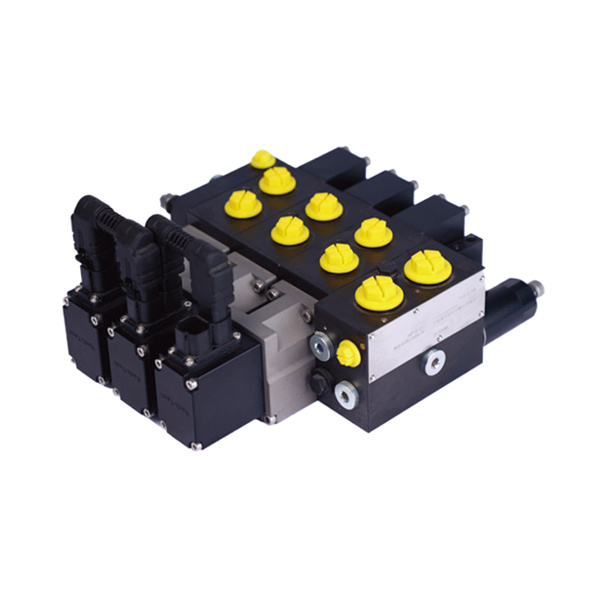
Abstract: HAWE PSV/PSL proportional multi-way valves fit both fixed and variable pump systems with standardized ports. They support oil supply & return, pressure measurement, pilot control and actuator drive. Integrated load-sensing interfaces enable load monitoring, multi-valve cascade connection and on-demand flow matching, ensuring accurate, stable and energy-saving hydraulic operation.
Radk Hydro is a leading manufacturer of proportional multi-way valves. Its products serve as fully compatible alternatives to equivalent HAWE models and hold a dominant position in the Chinese market.
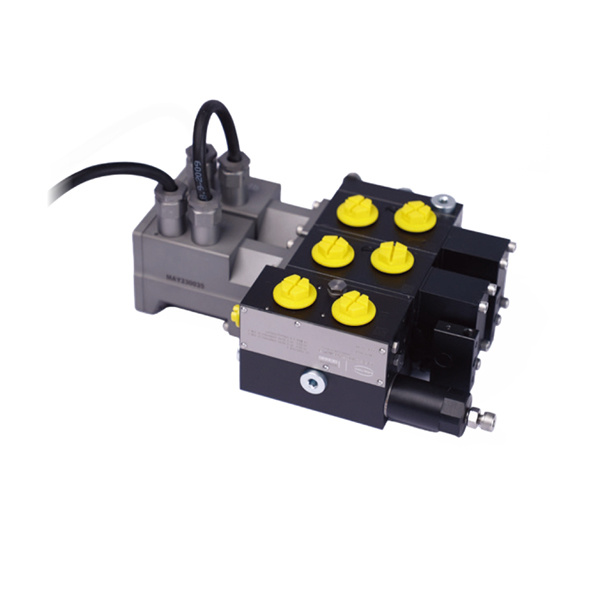
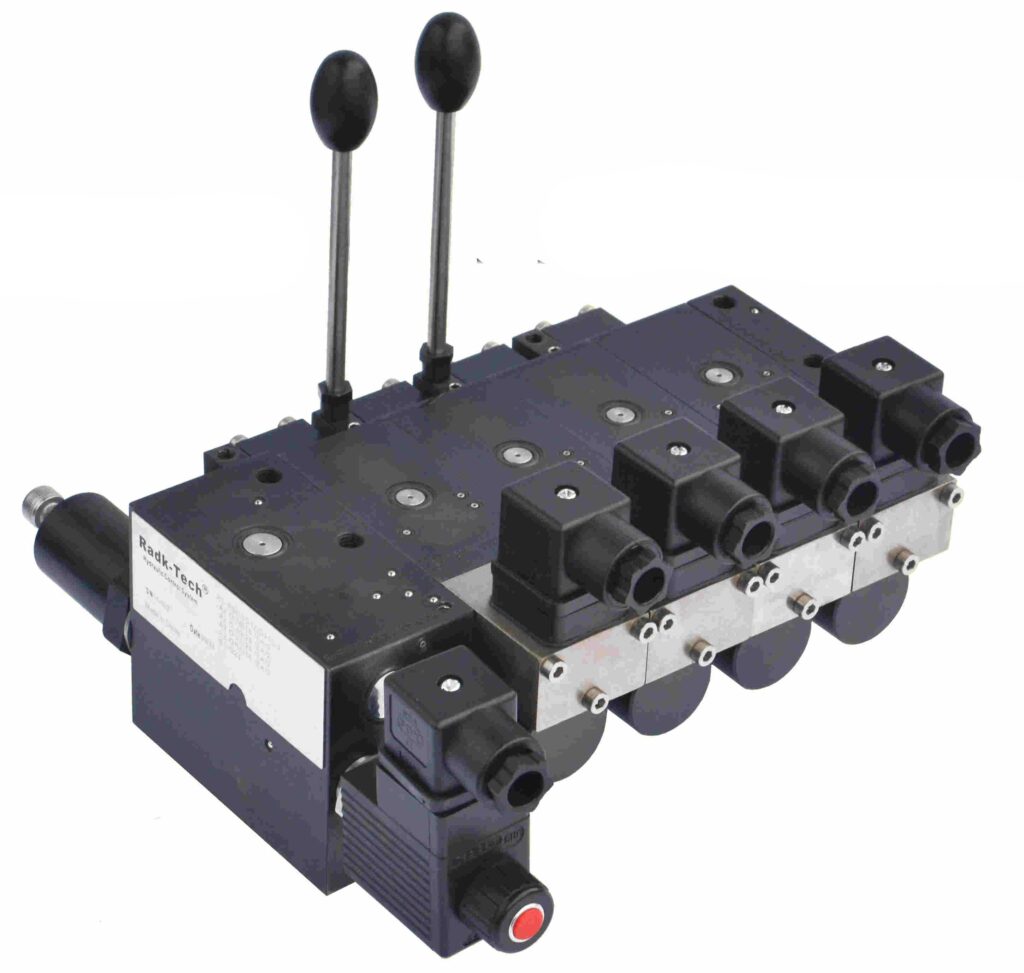
Q:Port P
A: ressure‑oil inlet. It delivers pressure oil from the hydraulic pump.
- PSL series (fixed‑pump system): Port P connects to a fixed‑displacement pump. The manifold integrates a three‑way flow regulating valve for an open‑center system. When no actuator is operated, this valve diverts pump flow to tank at low pressure.
- PSV series (variable‑pump system): Port P connects to a variable‑displacement pump or constant‑pressure system. The manifold normally uses a closed‑center design. Load‑sensing (LS) signals adjust pump displacement to supply flow on demand.
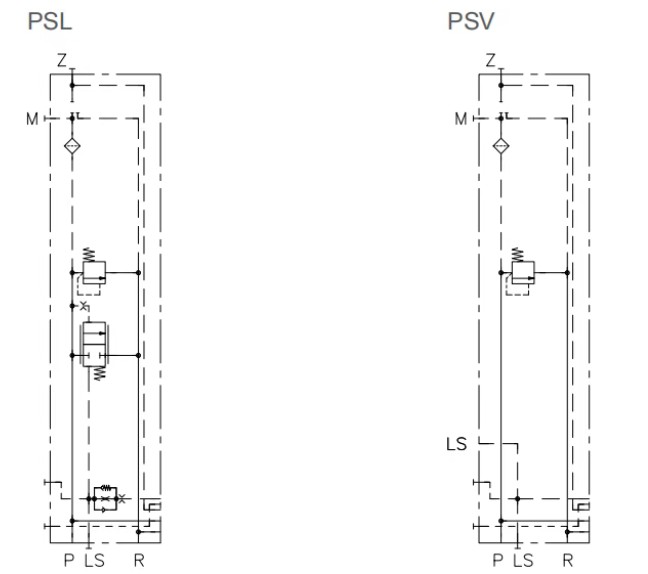
Q: Port R
A: Main system return‑oil port. It sends oil back to the tank.
- All internal overflow, pressure relief oil and return oil from actuators converge and discharge through port R.
- On certain models (end plates with E4 or E5 code), pilot return oil can flow internally into port R to simplify external piping.
- Keep low return‑line backpressure at port R to guarantee control accuracy.
Q: Port M
A: Gauge port. It measures system pressure at port P for commissioning.
- Connect a pressure gauge or pressure sensor here. Port M links directly to the main P oil passage inside the manifold to monitor pump‑supplied system pressure.
- During commissioning or maintenance, read values at port M to adjust the main pressure‑limiting valve on the manifold and set maximum working pressure correctly.
- At spool neutral position, measure low‑pressure circulating pressure (typically 10‑15 bar) for fixed‑pump systems. This checks working status of the internal three‑way flow valve.
Q: Port Z
A: Pilot‑pressure / control‑pressure port. It sits on intermediate plates or auxiliary sections for valve stacking or external module connection.
- Pilot‑oil supply and monitoring
- With manifold‑mounted pressure reducer: Port Z outputs reduced constant pilot pressure (normally 20 bar or 40 bar) for electro‑hydraulic or hydraulically operated valve sections.
- If pilot oil comes from internal supply, use port Z as a test point to check reducer performance.
- External pilot‑oil inlet
- Without internal pressure reducer: Feed external low‑pressure pilot oil (max 40 bar) into port Z to drive proportional valve actuators.
- Auxiliary module supply
- Port Z supplies control pressure for add‑on blocks fitted on working valve sections.
- Used with intermediate plates for remote pressure control or logic switching in certain circuits.
- Troubleshooting tip
- If manual operation works but electro‑hydraulic / hydraulic control fails, check pressure at port Z. Pilot spools cannot shift below 15 bar.
Q: Port A, Port B
A: Actuator ports on working valve sections. Connect to hydraulic cylinders or motors to change actuator movement direction.
- Power output function
- Port A and Port B correspond to two movement directions. For cylinders: oil to A extends the cylinder; oil to B retracts the cylinder.
- Output flow to A or B depends on spool travel (handle angle or input current). It delivers precise proportional speed adjustment for actuators.
- Pressure‑related protection
- Maximum working pressure of A/B ports generally matches port P.
- Secondary relief valves (shock valves) on many valve sections open under impact pressure from loads such as swinging booms. They protect actuators and pipelines.
- Anti‑cavitation check‑valve makeup oil: When actuators drop fast under self‑weight and create vacuum, makeup check‑valves draw oil from return lines through A/B ports.
Q: Port T
A: Pilot‑oil return port. It sends pilot control oil back to tank.
Q: Port U, Port W, Port X
A: These ports extract load‑pressure signals, enable external monitoring and handle pilot control for complex hydraulic logic.
- Port U: Load‑pressure signal from actuator port A.
- Port W: Load‑pressure signal from actuator port B.
- Connect external pressure sensors, pressure switches or control components such as counterbalance valves. Real‑time A/B‑port pressure drives these components.
- Monitor actual load pressure of individual cylinders or motors.
- Port X (and XH variant): Handles load‑sense signals or accepts external control sources.
- Load‑pressure pickup: In some configurations, port X serves as shared external pickup for A‑port and B‑port load pressure.
- External pilot‑oil inlet: Supplies drive pressure to shift main spools under hydraulic or electro‑hydraulic control.
- LS‑signal pickup: Port X can collect internal maximum‑load pressure and send it to external regulators such as variable‑pump controllers.
- Port XH: Special‑code end‑plate version for high‑pressure‑signal relief or remote unloading signals.
- Troubleshooting: No electro‑hydraulic response → verify 20‑40 bar pilot pressure at port X. For precise load monitoring, connect sensors to U / W ports.
| Port Name | Function / Connection Point | Main Application |
| U | Actuator Port A | Independently monitor pressure at Port A or drive additional safety modules |
| W | Actuator Port B | Independently monitor pressure at Port B or drive additional safety modules |
| X | External Control / LS Signal | Feed external pilot‑oil or serve as shared load‑sensing signal port |
During system commissioning, if electro‑hydraulic control shows no response, check whether pilot pressure at Port X meets the required opening value (normally 20‑40 bar). For precise load monitoring, connect sensors to Port U or Port W.
Q:Port Y
A: Port Y sits on end plates or special manifolds. Its core purpose: cascade or route load‑sense (LS) signals.
- LS‑signal cascading (most common use)
- When multiple multi‑way valve groups work in series, use port Y to transfer LS pressure signals to downstream valve units.
- The highest‑load‑pressure signal from downstream valves feeds into port Y of upstream valves.
- The pump receives maximum‑load pressure across all cascaded valve groups and adjusts its output pressure and flow accordingly.
- External pilot‑oil return
- On selected special‑function end plates, port Y acts as an independent pilot‑oil return port.
- Use it to separate pilot‑oil return from main return lines (Port R / Port T). Lower pilot‑circuit backpressure improves control accuracy.
Wrong Y‑port piping causes poor actuator performance or pump pressure build‑up.
Q: Port LS
A: Load‑pressure feedback port. It is the core signal channel for load‑sensing systems.
- It sends the highest‑load‑pressure signal from cylinders or motors back to pumps or pressure‑flow regulators.
- LS signal tells pumps the required system pressure. Pumps output pressure equal to “LS pressure plus spring‑set differential pressure”. The system supplies just enough pressure for the load and saves energy.
- For cascaded multi‑valve layouts, port LS transfers load‑sense signals between valve groups so pumps always respond to the system’s maximum load.
A: Port DW
Q: Auxiliary external connection channel for LS‑signals.
- Port DW routes LS‑signals outwards or between cascaded components. It extends LS‑signal paths.
- Use external hard piping via port DW when internal flow passages cannot complete signal transmission for complex layouts. Keep the whole signal chain intact.
| Port | Full Name | Core Function |
| LS | Load Sensing | Core LS signal; controls pump pressure & flow for energy saving |
| DW | Auxiliary LS Signal Port | Cascaded external series connection for LS signals in multi‑valve systems |