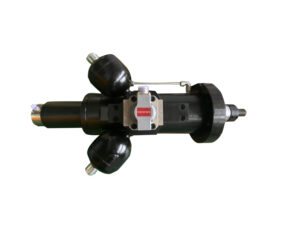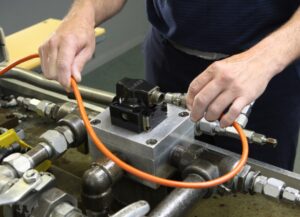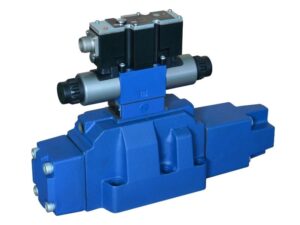
When you select a proportional valve, check these key parameters first: rated flow, spool ratio, spool center function, electronic control type (on‑board electronics / external drive), communication protocol and brand‑specific options.
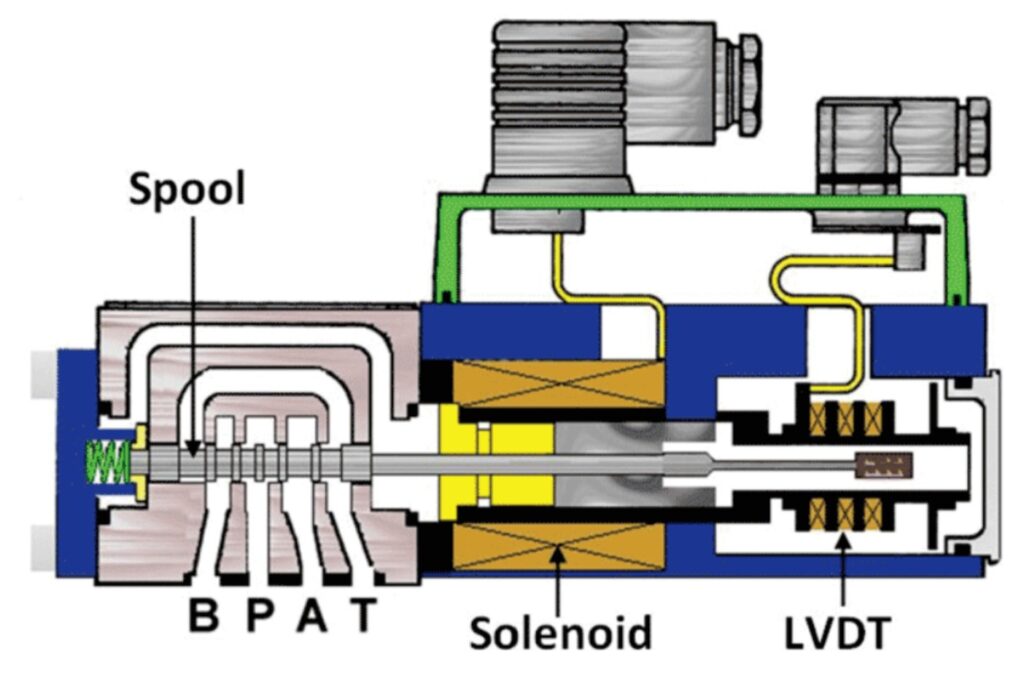
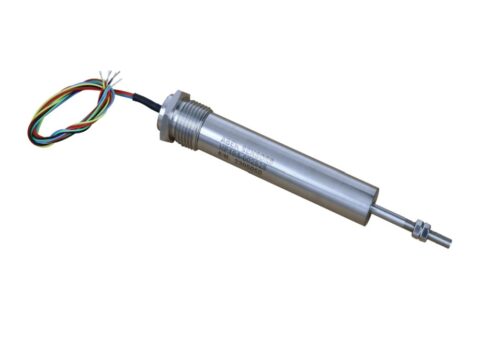
Among all selection points, the LVDT spool position feedback is easy to get wrong. Many buyers pick non‑LVDT valves just to cut initial purchase cost.
For simple‑duty low‑end machines, open‑loop valves without LVDT work fine. But many engineers only focus on upfront cost. They overlook real‑world benefits of LVDT closed‑loop feedback: better accuracy, faster response, higher flow capacity, stronger reliability and easier maintenance. Skipping LVDT may create hidden machine risks and raise long‑term service cost.
This practical guide explains the core differences between LVDT‑equipped and non‑LVDT proportional valves to support your correct component selection.
Control Accuracy: Open‑loop works, closed‑loop delivers high precision
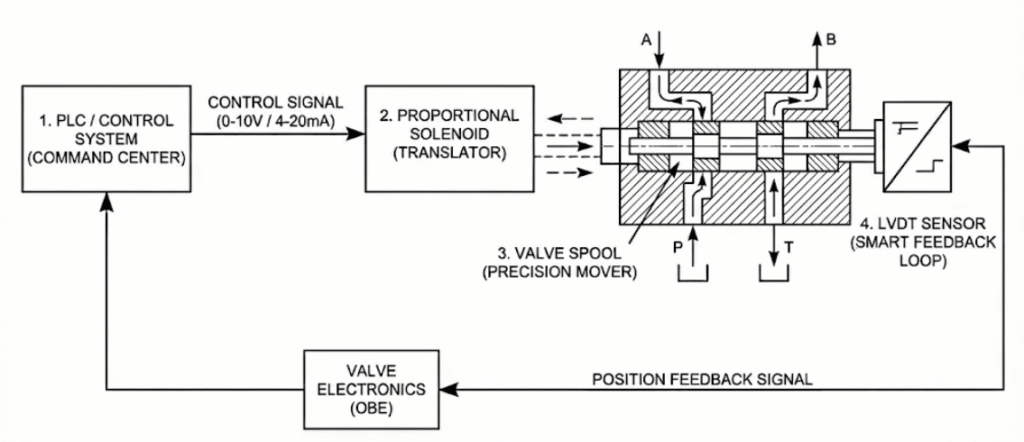
LVDT measures real‑time spool position. It builds position closed‑loop correction.
On LVDT‑fitted proportional valves, the controller compares target spool position against actual LVDT reading. It adjusts drive signals immediately when deviation occurs, so the spool lands at the exact required position.
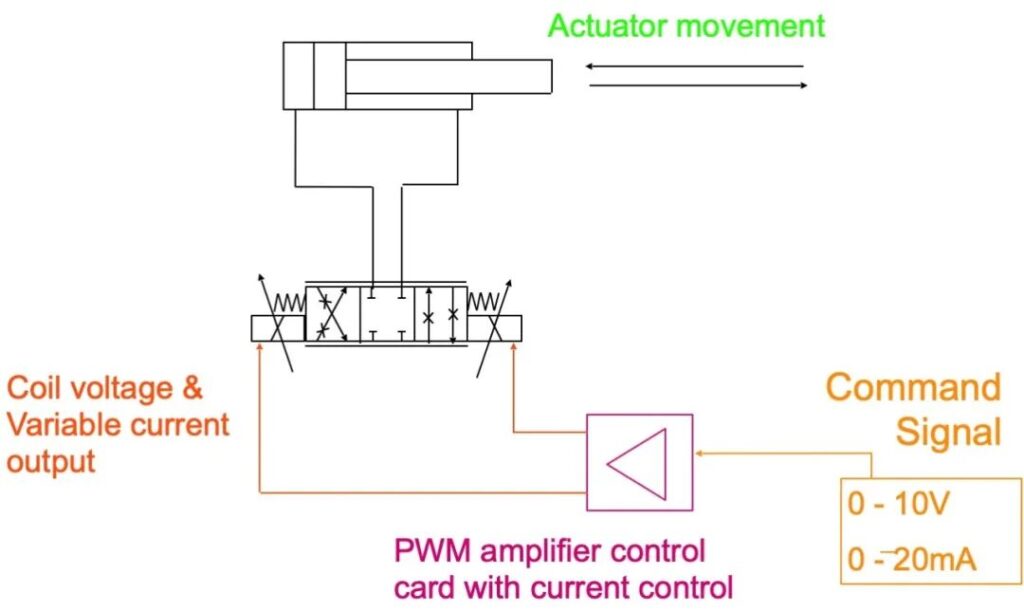
Standard proportional valves without LVDT run in open‑loop force control mode. Spool position comes from balance between solenoid force and spring force. No position sensing, no error correction. Internal friction and hysteresis limit control accuracy to 1%‑2%. This performance meets requirements for general applications.
Proportional valves with LVDT closed‑loop feedback reach 0.1% position accuracy. The extra precision proves critical for high‑end applications such as precision pressure control, fine speed regulation and multi‑axis synchronization. It directly decides machine processing accuracy and operating stability.
Response Speed: Do millisecond‑level timing gaps affect machine dynamic performance?
Why does dynamic response matter for hydraulic systems? Dynamic response decides how well your system follows control commands. Large performance differences exist between open‑loop and closed‑loop valve designs.
- LVDT closed‑loop proportional valve: millisecond‑scale error correction. Full‑stroke (0‑100 %) step response can be as fast as 10 ms.
- Non‑LVDT open‑loop proportional valve: no fast closed‑loop compensation. Typical step‑response time ranges from 30 ms to 50 ms.
When will you hardly notice this time difference? Under steady‑speed, static operating conditions, the gap is barely visible.
When does fast response become critical? Automated machines with frequent direction changes, dynamic speed tuning and fast command tracking benefit greatly. LVDT valves produce low‑lag fast movement and improve overall dynamic control quality.
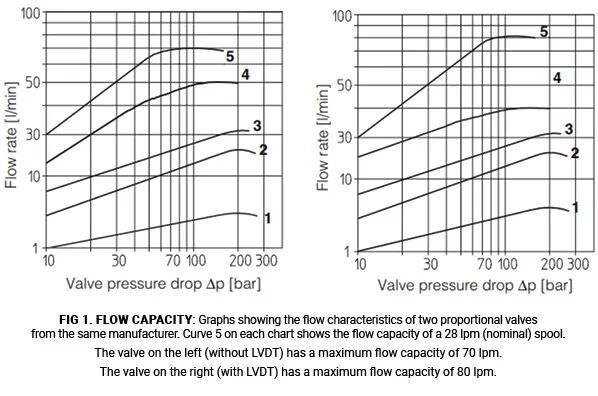
Flow Capacity: Can the same valve body deliver different usable flow rates?
Do identical port‑size proportional valves always offer the same maximum flow? This is a widespread misconception. LVDT configuration changes effective flow capacity.
How does flow saturation happen on non‑LVDT open‑loop valves? Open‑loop valves rely on solenoid‑spring force balance. Input current sets solenoid thrust. High‑velocity oil flow creates Bernoulli hydrodynamic flow‑force. This force pushes the spool backward. An open‑loop system cannot detect this offset or add compensating thrust. Actual spool opening falls below the set value, and the valve hits flow saturation early.
How does an LVDT closed‑loop valve solve this problem? The control target is real spool position. If flow‑force pushes the spool away from its target, the system increases solenoid drive current and thrust. It holds the spool at the required opening.
Take a 10 L‑rated spool from the same product series as an example. Compared with open‑loop non‑LVDT versions, LVDT closed‑loop proportional valves deliver higher effective flow and stronger anti‑saturation performance. They make full use of the valve’s rated‑flow capability.
Operational Reliability: Can your valve resist spool sticking under high‑pressure harsh conditions?
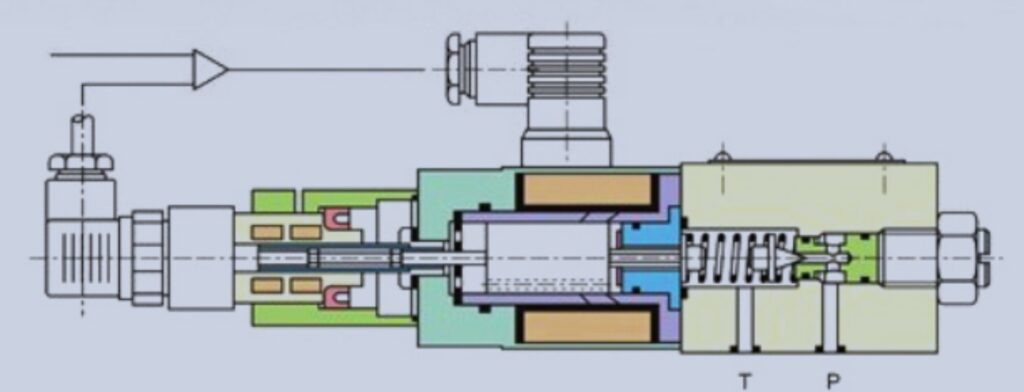
What causes spool sticking inside hydraulic valves? After long‑term standstill, tiny oil contaminants stick inside spool‑sleeve clearances. Sticking friction rises sharply under high‑pressure working conditions. Open‑loop and closed‑loop valves react differently to this disturbance.
What risk exists for open‑loop valves without LVDT? Output solenoid thrust follows the opening command. A 30 % opening signal only outputs 30 % of full solenoid thrust. Minor spool sticking can exceed this thrust limit. You observe delayed spool movement, insufficient opening and machine malfunctions.
How does an LVDT closed‑loop proportional valve handle spool sticking? It has adaptive error correction. When the controller sees the spool cannot reach its target position, it raises drive current — even up to 100 % full rated current. Maximum solenoid thrust overcomes sticking friction and completes correct spool travel. This explains why OEM LVDT‑type proportional valves normally support higher maximum drive‑current and handle tougher working conditions.
When can you safely run non‑LVDT valves? Non‑LVDT valves work reliably with clean hydraulic oil under normal‑duty cycles. For high‑pressure continuous‑operation critical‑equipment, can you skip LVDT feedback? No. LVDT delivers irreplaceable reliability advantages for these demanding applications.
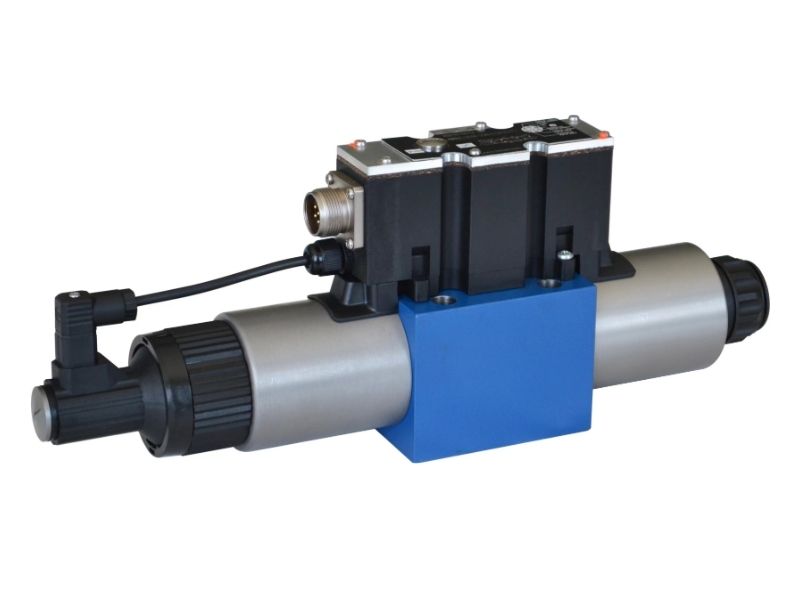
Fault Troubleshooting: Can LVDT help simplify maintenance and predict hidden faults?
Is LVDT only for control purposes? No. It works as a powerful diagnostic tool and lowers on‑site troubleshooting difficulty.
How do maintenance technicians use LVDT data during machine failures? They read real‑time spool‑position feedback. They check whether the spool follows control commands. If spool movement behaves normally, technicians rule out three common fault sources: proportional valve body, drive electronics and field wiring. They shift inspection focus to mechanical assemblies, loads and hydraulic circuits. Unnecessary component disassembly stops, and machine downtime shortens significantly.
Can LVDT support predictive maintenance for high‑value critical machines? Yes. Monitor long‑term position deviation between command signal and real LVDT feedback. Gradually growing response delay and widening position offset act as early‑warning signs. You can replace valves during scheduled‑maintenance shutdown windows. You avoid unexpected breakdowns and unplanned production stops.
Conclusion
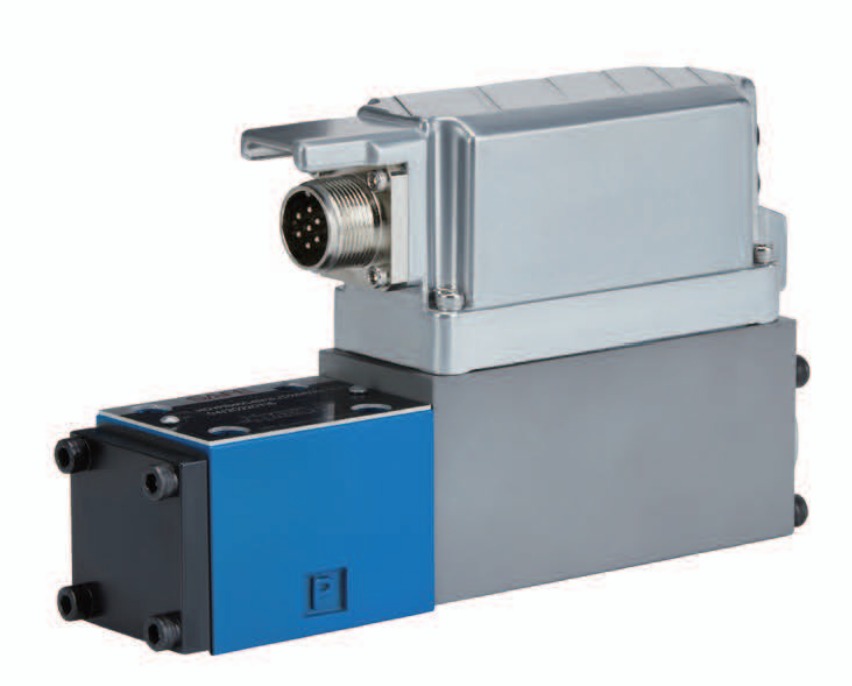
Is saving money by removing LVDT closed‑loop feedback a good long‑term choice? Many project‑specifiers remove LVDT feedback to reduce initial purchase cost. Short‑term cost saving comes with trade‑offs: reduced system accuracy, poorer dynamic response, lower usable flow and weaker operational reliability.
What real‑world value does LVDT closed‑loop feedback bring? Field‑proven LVDT closed‑loop feedback improves overall hydraulic‑system performance. It cuts failure rates, maintenance cost and unplanned‑downtime losses.
For modern hydraulic machinery with harsh operating conditions, high‑automation requirements and strict stability targets, is LVDT‑equipped proportional valve worth selecting? Yes. LVDT spool‑position feedback is a key configuration to boost your machine’s competitive performance.