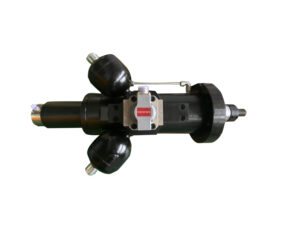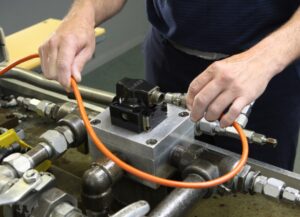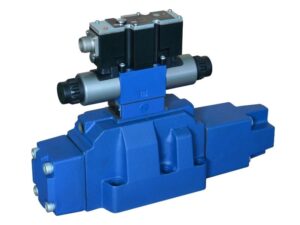
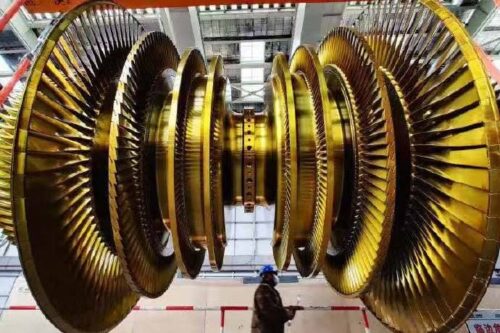
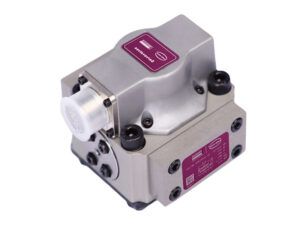
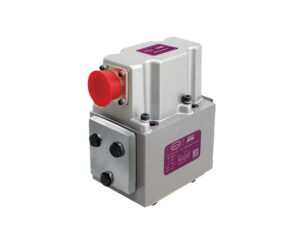
Proportional valve 4WRPEH 6 and servo valve series G761, 072, G771K, G772K and G773K manufactured by Radk Hydro are widely used for valve regulation in thermal power systems. Our products can fully replace equivalent items from MOOG and Rexroth. Feel free to contact us anytime for model selection and product replacement demands.
I. Common Servo Valve Faults at Thermal Power Plants
1. Control valve hunting and minor load fluctuation
Tiny sludge and metal particles partially block nozzles, orifices and pre-filters. This makes the pressure difference between oil circuits unstable. Then the servo valve has zero drift and unbalanced gain. Besides, spool sticking or slight deformation of the feedback rod will destabilize closed-loop control and lead to low-frequency hunting.
2. Slow actuator response
Long-term operation wears the matching surfaces of the spool and sleeve. Internal leakage increases and the effective output flow drops. Meanwhile, the torque motor coil ages and its impedance shifts. The electric signal conversion efficiency reduces, so the overall response becomes much slower.
3. One-way operation failure and single-direction sticking
One side of the nozzles is fully blocked, and impurities in the single-side oil circuit jam the spool. The flexure tube fatigues and shifts out of position, so it loses elasticity and fails to reset the spool normally. In addition, aging of the single-side electric circuit leads to unbalanced torque output.
4. Low system pressure and abnormal oil temperature rise
Excessive internal leakage occurs inside the servo valve. High-pressure oil circulates uselessly within the valve. It not only reduces system pressure but also generates extra heat. Long-term scouring by impurities wears the sharp edges of the spool. The sealing performance declines and internal leakage gets worse continuously.
5. Severe zero offset and excessive static deviation
Continuous vibration bends the feedback rod and shifts the air gap of the torque motor. Oil impurities stick to the gaps between armatures and magnetic conductors and break the magnetic field balance. Long-time high-temperature operation also deforms internal parts.
6. Coil faults and abnormal signals
The coil gets damp, ages, short-circuits or opens. Loose or poor wire connections also cause problems. Electromagnetic interference is another factor. High working temperature damages the coil insulation layer over time and disrupts signal transmission.
II. On-site Solutions for Servo Valve Faults in Thermal Power Plants
1. Emergency handling during operation (Online work without unit shutdown)
-
Online flushing and draining
Open the bypass filter and drain valve of the EH oil system for short-time draining. Replace the small external filter of the servo valve. This removes suspended impurities in oil and solves slight blockage and minor valve hunting.
-
Fine zero calibration
For zero drift and static deviation, re-calibrate the servo valve zero position and gain parameters under professional supervision. Match the settings with the DEH control logic to restore regulation performance temporarily.
-
Check and fasten wiring
Inspect wiring terminals, shielding layers and grounding devices of the servo valve. Fix poor connections, electromagnetic interference and bad grounding to resolve signal faults.
2. Standard maintenance after unit shutdown
-
Disassemble, clean and lap components
Take apart the servo valve. Fully clean nozzles, orifices, the spool and feedback parts to remove sludge and metal debris. Lap slightly worn spools and sleeves carefully to restore matching precision.
-
Inspect and replace faulty parts
Test the elasticity of the flexure tube, straightness of the feedback rod and insulation impedance of the coil. Replace all aged, deformed or worn parts. Do not reuse defective components.
-
Overall performance test
Mount the repaired valve on a test bench. Test its zero position, gain, hysteresis, internal leakage and response speed. Install the valve back to the system only after all parameters meet standards.
-
Full system oil filtration
After servo valve maintenance, circulate and filter the EH oil of the whole system. Test oil particle content, moisture and viscosity. This prevents the newly installed valve from contamination and damage.
3. Solutions for Typical Faults
-
Repeated control valve hunting
Focus on checking blockage in the pilot stage and zero drift. Thoroughly clean the nozzle and orifice assembly. Install high-precision filters and calibrate closed-loop feedback parameters. Replace the servo valve if its wear exceeds the allowable range.
-
One-way operation failure
Clear blockages in the faulty oil circuit. Check spool sticking and flexure tube condition. Fix deformed feedback rods. Replace the whole valve if repair is impossible.
-
Heavy internal leakage and high oil temperature
Replace worn spool and sleeve assemblies first to stop useless pressure loss caused by leakage. Meanwhile, optimize the cooling and circulation of the oil system to keep operating temperature stable.
-
Coil and signal faults
Replace aged coils. Re-do shielding and grounding work. Rearrange wiring routes and keep cables away from strong vibration and high-temperature areas to avoid electromagnetic interference.
III. Servo Valve Maintenance Summary
-
Keep oil clean all the timeThe internal matching gaps of servo valves are only at the micron level. Even tiny metal particles or sludge can block orifices and wear the spool. Conduct regular oil filtration, oil sampling tests and filter replacement. This is the most cost-effective maintenance method.
-
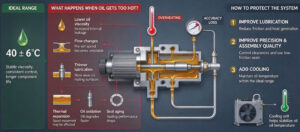
Avoid long-time high-temperature operationExcessively high EH oil temperature accelerates oil oxidation and gum formation. It also speeds up part aging and deformation and shortens the service life of servo valves greatly. Always keep the oil cooling system working properly.
-
Do not cover hardware faults by temporary zero adjustmentFrequent zero and parameter adjustment means the servo valve performance is declining. Never use parameter tuning to hide hardware failures, or sudden unit trip accidents may happen later.
-
Check oil quality before installing new valvesMany new valves break down right after installation. The main reason is unqualified oil in the system, which causes wear on new valves immediately. Always confirm oil quality first.