
1 Why proportional valves outperform ordinary on-off valves
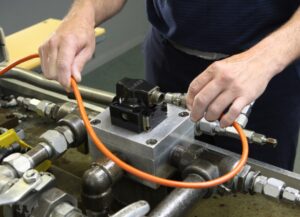
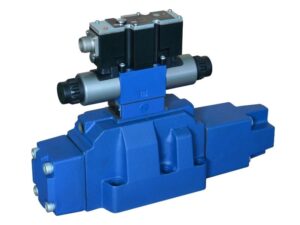
Common proportional valve types include proportional pressure valves, proportional flow valves and proportional directional valves. Proportional valves have these advantages over standard on-off valves:
- They use electrical signals to adjust oil flow and pressure proportionally. This lets you steplessly control the movement direction, running speed and output force of hydraulic actuators.
- You can set ramp functions to avoid shocks from sudden changes in pressure, speed or movement direction.
- They support closed-loop control with feedback signals to achieve higher control accuracy.
- They share similar operating rules and maintenance steps with regular on-off valves, and resist oil contamination well.
2 Ladle lifting system for billet continuous casters
What is a ladle turret? It rotates full ladles filled with molten steel to the casting station for pouring. It also moves empty ladles back to the filling position to receive new molten steel, and repeats this cycle continuously.
Full ladles carry heavy loads, usually over 200 tons in dead weight. The ladle lifting mechanism must run smoothly during startup and stop. This keeps the molten steel surface stable inside the ladle and avoids spillage. The lifting speed also needs to stay within a proper range; slow speeds will break production rhythm.
You can compare this to a waiter serving tea in a teahouse: they must not spill tea, and must serve fast enough to keep up with customers.
Standard hydraulic systems with on-off valves cannot meet these process demands. They create jerky starts and stops, and do not support adjustable speeds. For example, operators need slower speeds for full ladles and faster speeds for empty ones. Only proportional valves can handle such flexible control for ladle lifting and rotation movements.
3 Control logic of proportional hydraulic systems for ladle lifting
The control logic works as follows:
In the startup control program, set a ramp function. The proportional directional valve opens gradually from zero to a fixed opening within 3 to 5 seconds. The ladle lifting speed rises slowly to a steady value at the same time.
When the ladle nears the end of its travel stroke, activate another ramp function. The proportional directional valve reduces its opening from the fixed value to a small level over 3 to 5 seconds. The lifting mechanism slows down step by step. When the limit switch sends a stop signal, the proportional valve fully closes and the ladle stops moving.
4 Advantages of proportional hydraulic systems for ladle lifting
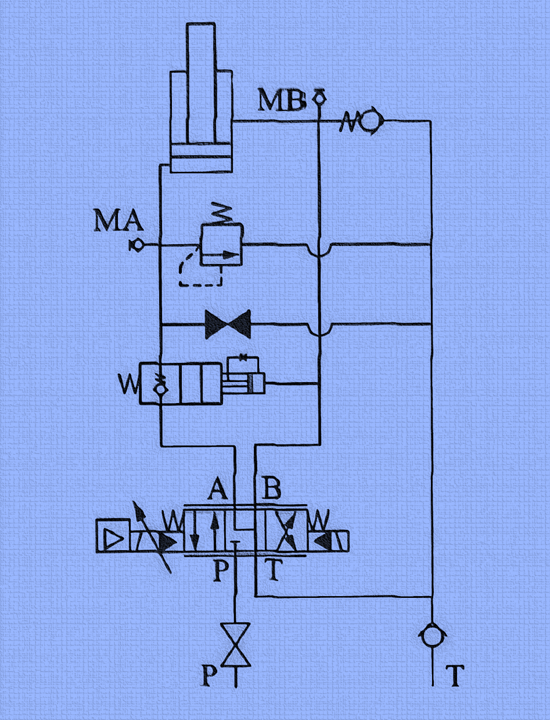
Large-flow proportional directional valves deliver enough flow to meet required ladle lifting speeds.
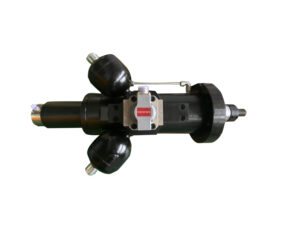
Counterbalance valves install on the bottom chambers of lifting cylinders. They lock the ladle’s position reliably when the proportional valve stays at neutral. They also stop runaway cylinder speeds caused by negative loads. The proportional hydraulic unit mounts directly on lifting cylinders. If downstream pipes burst and system pressure drops sharply, cylinders hold their current position to prevent safety accidents. This design also cuts shocks to hydraulic pump station parts during valve startup and shutdown, and extends the whole system’s service life. This system uses simple open-loop control yet fully satisfies all process requirements for ladle lifting.