
I.Core Characteristics of Two Types of Die Casting Machines
-
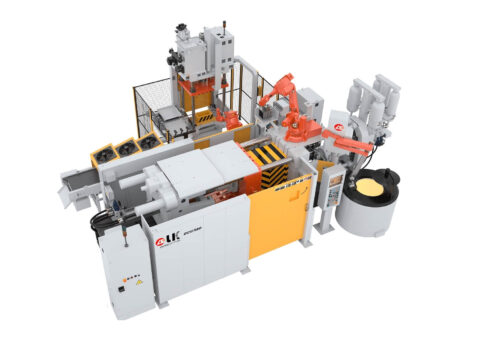
Cold Chamber Die Casting Machine
- Feeding method: Molten metal needs to be manually or automatically poured into an independent injection chamber; the injection chamber is not immersed in the molten metal and needs preheating before work but will cool down during operation.
- Applicable metals: Suitable for die casting alloys with high melting points and strong chemical activity, such as aluminum alloys, magnesium alloys, copper alloys, etc.
- Advantages: High injection pressure and precision, capable of producing large castings with complex structures and uniform wall thickness; less oxidation of molten metal, resulting in high casting quality.
- Limitations: Relatively cumbersome processes and lower production efficiency than hot chamber die casting machines; complex equipment structure and high initial investment cost.
-
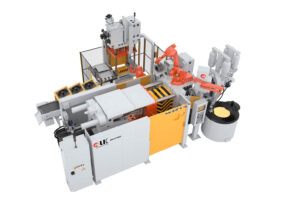
Hot Chamber Die Casting Machine
- Feeding method: The injection chamber (gooseneck) is directly immersed in the molten metal of the heat preservation crucible; during injection, the molten metal can be automatically sucked into the injection chamber without additional feeding.
- Applicable metals: Only suitable for die casting alloys with low melting points and good fluidity, such as zinc alloys, lead alloys, tin alloys, etc.
- Advantages: Simple processes, high automation degree and production efficiency; convenient equipment operation and low maintenance cost.
- Limitations: Low injection pressure, unable to produce large and complex castings; the injection chamber is prone to corrosion at high temperatures, with a short service life, and is not suitable for high-temperature metals.
II.Core Requirements for Servo Valve Selection of Two Types of Die Casting Machines
-
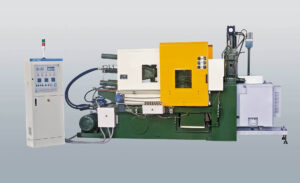
Servo Valve for Cold Chamber Die Casting Machine
Servo valve Installation position: Mainly installed in the hydraulic control circuit of the injection system, corresponding to the control units of the injection cylinder and booster cylinder; Core function: Precisely regulate the hydraulic oil pressure and flow during the injection process, realize the smooth switching of slow injection → fast injection → boosting, ensure uniform filling of large and complex castings, and at the same time stabilize the high-pressure holding state to improve casting density.
- High pressure resistance and large flow rate: Rated pressure ≥ 25MPa, adapted to the injection cylinder, to meet the requirements of rapid filling and high-pressure holding.
- Pollution resistance and impact resistance: Under the die casting conditions of aluminum alloys and copper alloys, hydraulic oil is prone to mixing with metal debris; the servo valve needs to have a pollution-resistant structure design (such as cemented carbide valve core, high-precision pre-filter element), and at the same time withstand the hydraulic impact during the injection stage to avoid valve core jamming.
- High precision and fast response: To meet the requirements of uniform wall thickness of complex large castings, the servo valve needs to quickly respond to electrical signals (response time ≤ 20ms), precisely control the multi-stage switching of injection speed (slow injection → fast injection → boosting), and adapt to the closed-loop control system.
- High-temperature stability: The temperature of hydraulic oil is likely to rise to 50-60℃ during equipment operation; the servo valve needs to maintain stable performance in the temperature range of -10℃~70℃ to avoid valve core wear or control precision drift caused by high temperature.
-
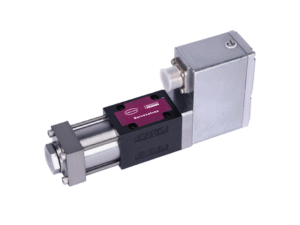
Servo Valve for Hot Chamber Die Casting Machine
Servo valve Installation position: Integrated in the hydraulic drive circuit of the injection mechanism (gooseneck assembly), close to the injection cylinder; Core function: Quickly respond to commutation requirements, precisely control the hydraulic power of injection and suction, adapt to short-cycle high-speed production, ensure the continuity of automatic suction and stable injection of molten metal, and guarantee the stable quality of mass-produced small castings.
- Medium and small flow rate and low power consumption: Hot chamber die casting machines have low injection pressure (mostly 5-10MPa) and focus on high-speed mass production of small parts; the servo valve can choose medium and small flow rate specifications to match the rapid suction and injection actions of the equipment, and at the same time reduce system energy consumption.
- High-frequency commutation: Commutation frequency ≥ 5 times/minute, small commutation impact, suitable for the stability requirements of automatic continuous production.
- Compact installation design: The injection mechanism of the hot chamber die casting machine has a compact structure; the servo valve preferably selects an integrated or miniaturized valve body to save installation space, facilitate integration with the hydraulic system, and reduce the complexity of pipeline layout.
- Convenient maintenance: The injection chamber of the hot chamber die casting machine is prone to corrosion and requires frequent maintenance; the servo valve needs to have a structure that is easy to disassemble and assemble and the valve core can be quickly replaced to reduce equipment downtime.
III. General Selection Notes
- Prioritize servo valves with fault diagnosis functions to facilitate real-time monitoring of valve core position and pressure fluctuations and reduce after-sales maintenance costs.
- Match the signal type of the die casting machine’s control system (such as 4-20mA analog signal, CAN bus digital signal) to ensure communication compatibility.