
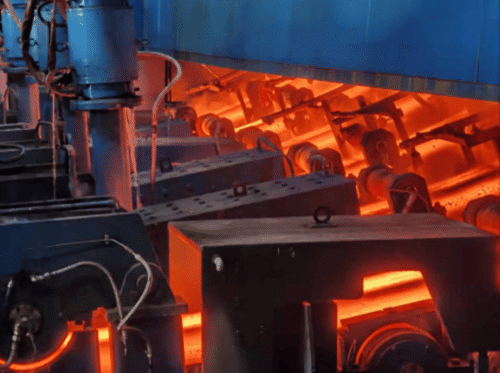
Servo valves are super important for keeping hydraulic systems working reliably in continuous casting machines. This is especially true in the metallurgical industry, where conditions are tough and demands are high. Even small glitches can mess up production and hurt product quality. Below is a simple, step-by-step guide to the most common servo valve issues, what causes them, and proven ways to fix them.
1. Servo Valve Sticking: When the Valve Gets Jammed
Key Signs
- The two vibration units shake out of sync
- Can’t lock the units in the middle position
- Vibration curves suddenly go off track
These problems directly make billet quality worse and might force unplanned production stops.
Main Cause: Dirty Oil (Causes 60% of Failures)
Continuous casting systems usually use polyester fire-resistant oil. If you don’t maintain the oil well, it gets worse over time—dirt particles get bigger and the acid level goes up. Servo valves are precision parts, so they need oil that meets NAS1638 Grade 5 (for particle size) and has an acid value below 0.2 mg KOH/g. Too many impurities make the valve stick, while high acid levels corrode the valve spool and sleeves, leading to leaks.
Easy Fixes
- Step up oil care: Stick to strict cleanliness rules, test particle count and acid value regularly, and change filters or oil right away if they’re degraded.
- Use handy testing tools: Carry portable offline smart test kits or full-function performance platforms to quickly find faults on-site.
- Clean filters often: Periodically wash the filters in the valve body to keep pilot oil channels clear.
- Switch to anti-pollution valves: In dirty areas, use tough models for longer life.
2. Null Bias & Shift: When the Valve Loses Stability
Key Signs
- Vibration units shake unevenly (frequency goes up and down)
- Amplitude is higher than set
- The two units stop in different positions each time
These issues come from the valve’s null bias or parameters drifting (due to temperature or pressure changes).
Main Causes
- Mechanical wear: High vibration wears down the valve spool shoulders (common in zero-overlap servo valves). This increases leaks, makes fluid noisy, causes deviation, and reduces performance.
- Electrical problems: Coil breakage, loose wires, sensor burnout (from external interference or welding), or water vapor getting in (bad sealing) that damages circuits.
- Spring failure: Tired or broken springs slow down reset, causing waveform distortion and system instability.
Easy Fixes
- Calibrate zero point regularly: Set a schedule to check with test platforms—make sure deviation stays below 3% (the industry’s safe limit).
- Replace worn parts: Swap out damaged valve spool, sleeves, and springs right away to get performance back.
- Improve sealing: Make the valve housing tighter; use protective gas if needed to keep out water vapor and dirt.
3. Increased Internal Leakage: When Oil Wastes Away
Key Signs
- Lower system efficiency
- Actuators move slowly or weakly
- Units stop vibrating
- Amplitude decreases
- Hydraulic oil gets hot faster
Main Causes
Worn valve spool or sleeves (creating bigger gaps) or old/damaged seals.
Easy Fixes
- Check seals regularly: Add seal inspections to your preventive maintenance and replace them when needed.
- Watch oil temperature: Keep an eye on hydraulic oil temp—sudden spikes mean there might be a leak.
- Use quality seals: Pick seals that resist heat and corrosion to make them last longer.
4. Other Common Faults
- High-frequency response failure: Caused by dirty oil blocking the valve core or damping orifices.
- Coil burnout: Happens when there’s too much current or the insulation breaks down.
- External leakage: Due to old seals or incorrect installation.
Final Tip: Servo valves work reliably when you maintain them proactively. Focus on keeping oil clean, calibrating regularly, and replacing parts on time. By fixing root causes (like dirt or wear), you’ll cut down on downtime, keep product quality high, and make your hydraulic systems last longer.