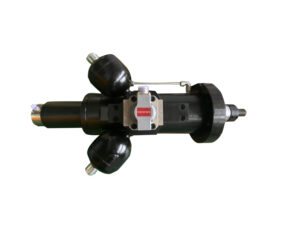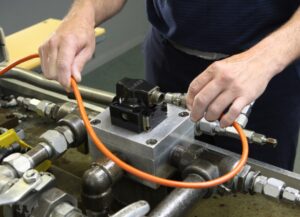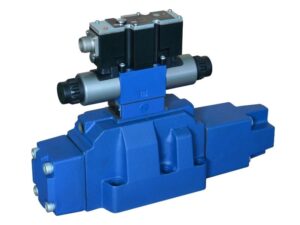
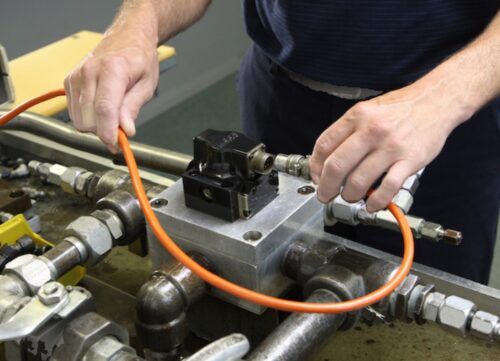
Electro-hydraulic servo valves are high-end, precision intelligent control components. They combine machinery, electrics and hydraulics. They are the core part of hydraulic control systems and determine the control accuracy of the whole system.
Electro-hydraulic servo valves use hydraulic oil as working fluid. Because they work with fluid, oil leakage is one common fault of servo valves.
01 What is oil leakage?
Oil leakage is a common problem for hydraulic equipment. Oil flows from the high-pressure chamber to the low-pressure chamber, or leaks out of the component. Leakage causes unstable movement and poor positioning of actuators. It reduces volumetric efficiency. In serious cases, system pressure cannot build up, and the whole system stops working. It also pollutes the environment and wastes hydraulic oil.
Hydraulic leakage includes internal leakage and external leakage. Normally, oil leakage refers to external leakage. Many factors lead to oil leakage. It can come from design, manufacturing processes such as casting, welding and machining, assembly, seal quality or maintenance.
02 Where do you check for oil leakage?
- Leakage at top cover or signal connector: Check if the seal rings at the housing and spring tube are aged. Check if the spring tube is broken.
- Leakage at valve end cap: Check if the seal rings on the end cap are aged or damaged.
- Leakage at valve bottom: Check if the seal ring at the valve bottom is aged or damaged.
03 What are the main causes of oil leakage?
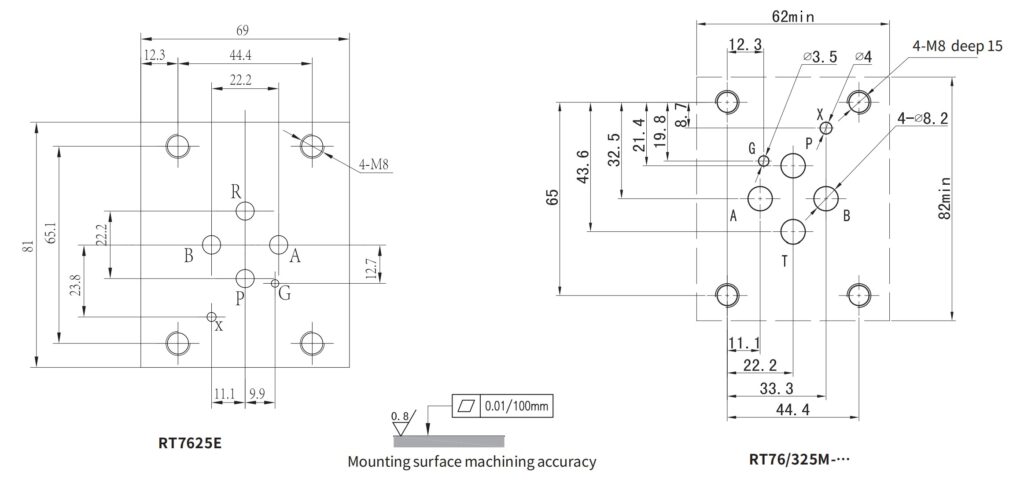
Poor surface finish of servo valve mounting base, bad sealing
- Machining issue: The mounting surface has low precision. It is uneven or has burrs.
- Disassembly & maintenance issue: Improper disassembly or repair contaminates the mounting surface. Particles stay on the surface and break the seal.
Defective seal rings at valve ports, damaged seals at valve plugs
- Installation issue Good seal rings need smooth, undamaged and regular sealing surfaces. When installing seal rings, the rings pass threads, sharp edges or shaft ends. Without edge preparation or special installation tools, the seal rings get scratched easily and leak during operation.
- Operation & maintenance issue Seals age and lose elasticity after long service life. Their sealing pressure drops below working pressure, and oil leaks at sealing surfaces.
Leakage between torque motor and valve body
Possible reasons: broken spring tube, softened spring tube after frequent high-cycle operation, cracked internal oil pipe.
Oil leakage at electrical connector
- Spring tube leakage
- Failed seal ring under spring tube
- Nozzle leakage
Uncontrolled servo valve plus oil leakage
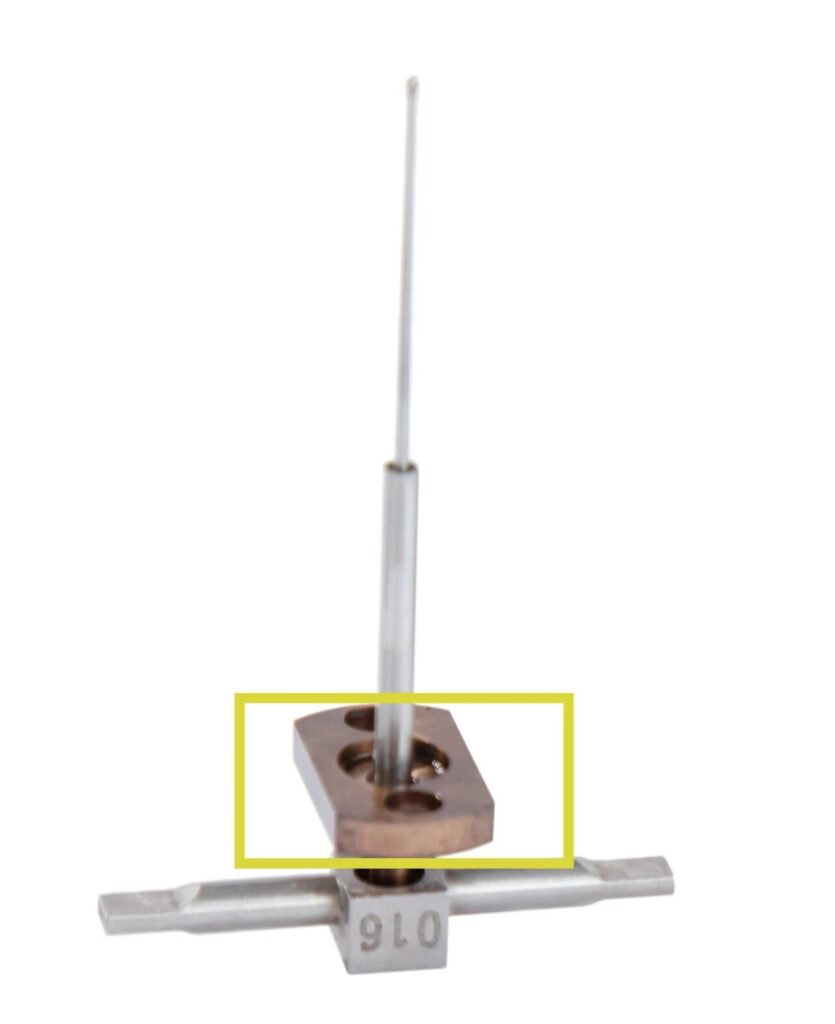
This usually means a broken spring tube. Oil escapes through gaps of the spring tube. The spring tube is a core part made of high-elastic alloy. Its wall thickness is only 0.06 mm. The torque motor applies signal load to it. Long repeated operation easily creates cracks. Resonance of the servo valve also cracks the spring tube. The spring tube uses C17200 beryllium copper. It is a high-performance elastic non-ferrous metal. It handles high stress and fatigue and reduces fatigue cracking and leakage.
Radk Hydro Tips
Radk Hydro has specialized in hydraulic servo technology for more than 20 years. Friendly reminder to all users:
- The roughness of servo valve mounting surface shall be at least Ra1.6. Flatness shall be within 0.025 mm.
- Do not disassemble servo valves by yourself. Improper disassembly can easily damage the valve.
You are also welcome to contact us for technical discussions. Let us learn and progress together.