As the core power unit of thermal power plants, steam turbines convert steam thermal energy into mechanical energy to drive generators. The DEH (Digital Electro-Hydraulic Control System) is the “brain” of steam turbines, and its stability is critical to unit efficiency and safety. The servo valve, as the DEH system’s core executive component, plays a key role in regulating turbine operating conditions. This article focuses on servo valves’ application, configuration, failure consequences and selection, with a concise background overview for industry reference.
Main Components and Working Principle of Steam Turbines in Thermal Power Plants
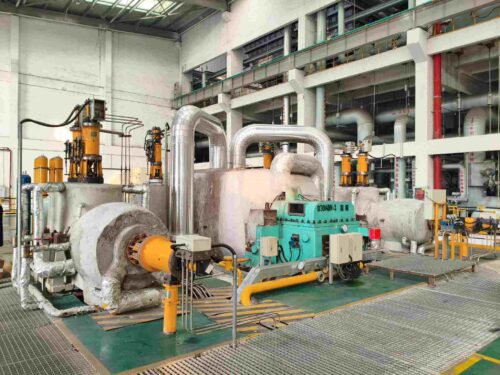
Steam turbines mainly consist of rotor, stator, speed control mechanism, lubrication and sealing systems, plus DEH and cooling systems. The rotor is the rotating core, while the stator provides support and steam channels, with all components cooperating for energy conversion.
It operates on steam expansion work: high-temperature and high-pressure steam from the boiler drives the rotor to rotate, converting thermal energy into mechanical energy. Exhausted steam is cooled and recycled, and the rotor drives the generator. Its operating parameters are adjusted in real time by the DEH system.
Turbine speed, load and steam intake must be precisely adjusted to adapt to grid fluctuations. The DEH system undertakes this task, with the servo valve ensuring adjustment accuracy and response speed.
Composition and Functions of DEH System, Core Role of Servo Valves
(I) Composition and Core Functions of DEH System
The DEH system integrates digital control, electro-hydraulic conversion, execution and feedback units. It outputs control commands, converts electrical signals into hydraulic power, drives actuators to adjust steam intake, and uses closed-loop feedback for precision. Its core functions include speed/load regulation, start-stop control and fault protection.
It maintains the unit at rated speed (3000r/min), responds quickly to grid load changes, and balances safety and reliability, laying the foundation for the servo valve’s function.
(II) Functions and Roles of Servo Valves in DEH System
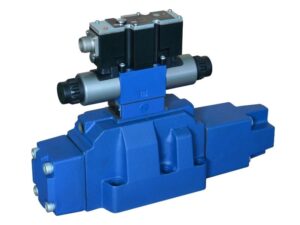
As the core of the DEH’s electro-hydraulic conversion unit, the servo valve is a high-precision electro-hydraulic proportional valve. It converts weak electrical signals from the DEH into proportional hydraulic flow signals to drive actuators, controlling turbine control valve opening and steam intake. It is key to ensuring adjustment accuracy, response speed and operational stability.
Its core roles are threefold: signal conversion and energy amplification, proportional precise regulation matching control commands, and millisecond-level high-speed response to avoid speed fluctuations and ensure stable operation.
Servo valve performance directly determines DEH adjustment quality, affecting turbine efficiency, stability and service life. It is an indispensable precision component for unit safety.
Application Configuration and Failure Consequences of Servo Valves
(I) Application Configuration of Servo Valves
Servo valve configuration in DEH systems is designed based on turbine power, adjustment accuracy, operating conditions and safety standards, following the principles of precise matching, redundancy, medium adaptation and anti-interference.
Generally, “one valve per actuator” is adopted. Units above 300MW use 1-main-1-standby redundancy to avoid unplanned shutdowns. Electro-hydraulic servo valves (e.g., MOOG series) are mainstream, with current-controlled types preferred for strong anti-interference in power plants.
Servo valves must match DEH hydraulic oil (mostly phosphate ester fire-resistant oil). They need corrosion resistance, good sealing, 10-20MPa pressure resistance and NAS 6+ cleanliness. Installed away from high-temperature/vibration areas with shock absorbers, they avoid performance impact.
(II) Failure Consequences of Servo Valves
As a high-precision DEH component, servo valve failure causes DEH malfunctions, turbine disorders and even shutdowns, leading to economic losses and safety risks, classified into three levels:
Minor failure: Reduced accuracy and delayed response, causing speed/load fluctuations, poor power quality and higher energy consumption, requiring timely calibration.
Moderate failure: Jamming or slight leakage, leading to slow actuator movement and load reduction, triggering alarms that require emergency manual intervention.
Severe failure: Complete jamming or leakage, causing DEH failure, turbine overspeed/overpressure, emergency shutdown, equipment damage and potential safety hazards.
Selection List of Servo Valves for Actuators
Servo valve selection for actuators directly affects performance. It should be based on actuator parameters, DEH requirements, turbine power and operating conditions, following this list:
- Flow parameter: 10-50L/min rated flow, matching actuator speed and volume to balance response and energy efficiency.
- Pressure level: 15-25MPa, with 1.2-1.5x pressure margin to avoid damage from fluctuations.
- Control signal type: Current-type (4-20mA) preferred for anti-interference in power plants; optional voltage-type (±5V/±10V).
- Medium compatibility: Match hydraulic oil type, ensuring corrosion resistance of seals and spools to avoid leakage/jamming.
- Accuracy and response: Linearity error ≤±1%, hysteresis ≤0.5%, response time ≤50ms, adapting to turbine condition fluctuations.
- Environmental adaptability: -20℃~60℃ operating temperature, ≥IP65 vibration resistance, and good dustproof/moisture-proof performance.
- Redundancy and reliability: Redundant configuration for large units; select reputable brands (MOOG, Atos) for spare parts and after-sales support.
- Installation and maintenance: Compact, easy-to-disassemble models with self-inspection/alarm functions to reduce maintenance time.
Conclusion
Servo valve performance is critical to turbine efficiency, safety and economic benefits. Grasping its configuration, failure risks and selection criteria improves DEH quality and reduces unplanned shutdowns. Future servo valves will develop towards higher precision, reliability and intelligence, supporting efficient turbine operation for thermal power development.